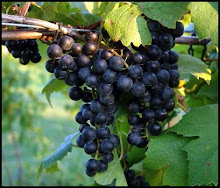
So this weekend we’re going to take a little wine tour of our own, we’re going to hit some of the SW Michigan wineries to see what they are up to. This is an exciting time in the wine biz, we are about a month out of harvest and the forecast is good here in Indiana and in Michigan.
We talked about trying some mainstream grapes as a trial this year and we are going to move ahead with that, focusing on red wines and rhine-style wines. I feel our weakest line has been our dry reds, we’ve had some good ones, but there are not a lot of red grapes that make great dry red wines that grow well in the Midwest. So we are going to take a shot with some Shiraz, cabernet franc, and pinot noir. Small batches, so we will keep those interested up-to-date on “when” they can try them and even buy them if they like’em.
I have been toying with a new batch of Foch I think might do well as a dry red wine, but my intent was to release it as a semi-sweet. Our last batch of SWAYZEE was made with Chancellor grapes, but the batch before that was Foch. Both grapes have a nice flavor with a bit of sweetness. I was very happy with the Chancellor, but it was a test batch (120 gallons) I tried at the urging of a supplier. I had a few folks disappointed that the Swayzee was not a Foch, but many liked the Chancellor version as well or better.
We tend to be flexible with the grape we use for an established label, but we keep that wine in the same style as prior versions. There are a few exceptions due to popularity, like FAIRMOUNT, BUNKER HILL, KOKOMO CIDER, and JALAPA. We have so many people who walk in and ask for these wines by name, we hesitate to monkey with them much, although we always suggest a tasting.
So a future blog will talk about what we learned on our swing through SW Michigan’s wine country, we expect good things!
Thursday, August 13, 2009

Wednesday, August 5, 2009
into a glass and darkly...
Staring deep into a glass of wine can be mesmerizing. White wine shows shades of gold and amber, of straw and wheat, the light beams through making the glass glow.
Red wine varies from light reds like a stop light to deep purple-black that absorbs the light more then refracts it.
Occasionally, we see small specks floating about the wine, some so small so as to barely visible. We look closely, is that a dead bug? No, just a speck of something left from the winemaking process. Is this something we want to swallow? Is it harmless? The answer is yes, but this begets the further question of why they are little specks in the wine?
Wine particles can be missed by the filtration process or are created when they precipitate out of the wine after bottling. We see this a good bit in our wines since we do not use the “fining” chemicals used by most wineries, preferring to offer “naturally-made” wines as a healthy alternative.
But we continue to learn. Recently we purchased higher grade filters for our bottling line that we expect will have a significant impact on the amount of residual particulate matter in the wine.
The degree to which a winemaker filters his wine is one of personal preference, some winemakers TIGHTLY filter the wine, as low as .45 microns for white and fruit wines. Others do not like to filter below 1, or 5, or even 10 microns for fear of damaging the flavor of the wine.
Filtering is just one process a winemaker can use to affect the appearance of the wine, most use various chemical additives to stabilize the wine, to cause the wine to drop out any possible solids that might fall out in the bottle.
We feel filtering by itself does not significantly deteriorate the flavor of our wines, so we will move forward with our new filters and see what effect it has on the appearance of our products.
For several months we have been using synthetic corks in our wines and with generally good feedback. We’d like to hear from more customers if they like, dislike, or don’t care about this new cork we are using. Can you get it out of the bottle with little problem? Write me and next time we’ll see what you readers write about corks… at oakhillwinery@yahoo.com
Thursday, July 30, 2009
Decisions, Decisions
I was reading a Dilbert cartoon book last evening and one series caught my attention. Dilbert asks his boss to choose between two options, diametrically opposed. His boss says, “Do both!” to Dilbert’s frustration.
It gave me pause as I have been pondering whether to jump in and make some vinifera wines or stick with native and hybrid grapes we’ve been using since we opened. The answer was so obvious I am surprised no one suggested it! “Do both!”
Now that is not as simplistic a thought as you might guess, especially with a small winery having very limited space and storage capacity. But if we do it on a reasonable scale, I think this could work. We will produce a line of vinifera wines to offer in tandem with our regular fare. Of course, we will have to limit how much we make, but this is a solution to allow the customers to taste and decide which they prefer.
One suggestion that a reader did make was to offer both naturally-made and more conventionally made wines. We have been offering low sulfite, naturally made wines since we opened, although there is some frustration with suppliers who sulfite their juices in storage. We’ll address the issue of what impact the “naturally-made” angle of our wine has had on sales and the effect it has on market in an upcoming blog.
Now, does anyone have a really good Pinot Noir recipe? :)
Monday, July 27, 2009
Six Years already?
Yes, we've been open here for six years now, plus two more making wine and remodeling the carriage house, plus two years before that planning and pondering whether we could be successful. But the place has been open to the public for six years...
The traditional sixth anniversary gifts are candy, iron, or wood. Now, we are not wrangling for any gifts ourselves, but we are looking forward to having a nice party for our customers 1-6pm on Saturday, August 8th. I will not promise we will have any candy, iron, or wood for you either, but we will have some fun things going on.
From 1-5 pm we will have free tours of our modest winemaking area at the top of each hour (1-2-3-4-5 pm); We will have live music from 3 to 6 pm outside, under the deck. Chad Schrock is returning to the winery with his unique blend of celtic and modern music, playing mandolin and guitar.
We will be introducing an oaked version of our popular white wine, MISSISSINEWA WHITE, made with Seyval Blanc and spending many months soaking in Hungarian Oak. We’ve been sneaking some sips from the barrel and its going to be good, if I do say so myself. But we only made one barrel, so don’t miss it!
There will be some other stuff happening and some other surprises. We hope to see you there…
Friday, July 24, 2009
Your opinions do count
You guys are funny, no really. 17 emails so far and there is truly no consensus as to what direction the wine drinkers think the wine-maker should go. I love the comment “I think you should keep making sweet wines”, which of course we will. Another thought, “Does it matter what grapes you use, does it make much difference?” The answer to that is “YES!”. Even within the native American grapes, we see a surprising variance from year-to-year on what the juice tastes like and what the wine you make from it tastes like.
Take the sweet (2008) Concord wine we make called “Bunker Hill”, its our best seller and has been since our first year. This vintage is lighter in color (red garnet?) then last years wine, yet it came from the same vineyard. The flavor is pure Concord, but it does not have the intensity or volume of flavor we’ve had in past vintages. Yet some people say, “Like this batch best!” and others say, “Its good, but not as good as last year”.
In my discussions with regular customers, I try to convey the swing it is to start making wines from the European varietals as opposed to the native or hybrid grapes. One person said, “Are you afraid to compete head-to-head with the Big Boys?”. Well, yes and no. My feeling has been I can buy a chardonnay anywhere, but a good seyval blanc is harder to find. I think small local wineries should look at making different wines, wines consumers can’t buy elsewhere.
Yet, there is the question in my head, “How good of a cabernet could I make?” So the thought process goes on, what do you think? Send us an email or click on the “comment” below, no need to register, you may post anonymous or not.
Monday, July 20, 2009
To Vint or not to Vint?
So, we were discussing what grapes we wanted this year to make next year’s wine from? What are the issues and what are the choices? For a small winery it is difficult to make long-term commitments with a particular vineyard.
If a vineyard can produce a couple of tons per acre and we want two tons of a certain grape, what are they going to do with the other six tons? Hopefully sell it to another small winery? We small wineries need to look hard at banding together so we can buy the whole output of a vineyard, assuring them of a fair price and no hassle in disposing of the harvest. But thats another post...
What many small wineries do is buy their juice from large juice resellers, who buy a lot of grapes from a lot of vineyards. The question we are facing right now is what path to take for our better wines and the harvest drives that a bit. Availability and price are key...
This spring we were offered the chance to buy “vinifera” grapes (chardonnay, cabernet, reisling, merlot, etc) at a very good price from a juice supplier who claims high quality PLUS low prices to even us small guys. The vinifera grapes are what the Big Boys make their wines from; the public knows them and asks for them.
For more then seven years we have been promoting hybrid (Foch, Baco, Vidal, Vignoles) and native American “labrusca” grapes (Concord, Niagara, Catawba) and learning to maximize the flavor using our old-fashioned, natural methods.
So, do we try to make Oak Hill Winery versions of the classic French grape varieties, or do we stick with the less traditional grapes we have been venting for over seven years? What do you think dear reader? You may comment below (click on “comments”) or email us at oakhillwinery@yahoo.com.
Wednesday, July 15, 2009
What grapes from where and when?
So we are pondering our choices for the fall grape harvest. Like most wineries, we do not have our own vineyards, so we seek out vineyard owners and see what grapes they expect to have for the upcoming harvest.
Small wineries like us face the most difficult challenge. We do not have the capacity to buy the whole production of a typical vineyard, so we are often there to ask for a “ton or two” of grapes. We are often called by vineyard owners at the last minute, “We’ve got some extra…” and we appreciate that.
Our own press/crush facilities are small, so we prefer to buy juice for white and fruit wines to simplify the process. Red grapes for serious wines are still necessary, although there are some “cold press” wine-juice producers doing an admirable job of extracting color and complexity in juice form.
When all is said and done, a number of our sweet wines are made with straight juice from juice-suppliers who do a great job of providing excellent quality products at good prices. There are very few wineries in Indiana who do not buy some juice from one of the numerous outlets, although we all prefer to buy locally grown fruit.
What does that mean for the consumer? It’s a fair comparison when you look at buying vegetables or meat or even pasta, there are many sources for these menu ingredients. Some cooks prefer certain suppliers products to get the desired outcome (been watching the Victory Garden too much?). Other chefs give us excellent entrees with ingredients from our local market. This means its up to the consumer to decide what’s important when they make a wine buying decision.
What decisions are we pondering at the Oak Hill Winery this year? Watch here for our next posting…
Subscribe to:
Posts (Atom)